Exciting Opportunities
Remote Media URL
EALC News
- The next Korean Proficiency and Placement Test (KPT) will be scheduled for an in-person administration at 9:30 AM [CT] on Friday, January 15, 2027. Please note that this test will NOT be administered online. Time: 9:30 am to 12 pm (CST)... Read full story
Faculty Spotlight
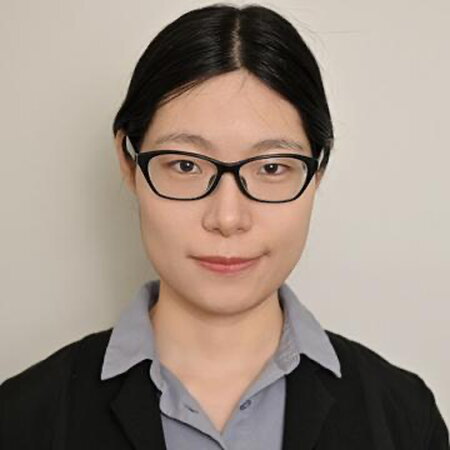
Dr. Yunxin Li to join EALC faculty in August 2026
The Department of East Asian Languages and Cultures is delighted to welcome Dr. Yunxin Li to the faculty. Trained across history, literature, and digital humanities, Dr. Li brings an exciting interdisciplinary perspective to the study of early China that speaks to questions of power, gender, social relations, and knowledge across time. Her scholarship and teaching exemplify a thoughtful integration of rigorous humanistic inquiry with innovative digital methods, and her work resonates strongly with EALC’s commitment to collaborative, cross-field engagement. We are excited to have Dr. Li join...
Faculty Spotlight
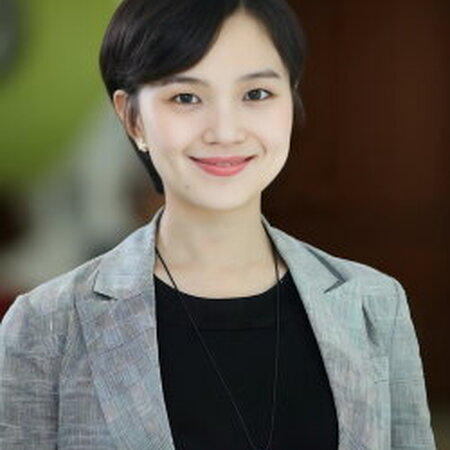
Dr. Belinda Qian HE joins EALC faculty in Fall 2025
We are delighted to announce that Dr. Belinda Qian He has joined the Department of East Asian Languages and Cultures as Assistant Professor of East Asian Cinema and Media Studies.Dr. Hé's work lies at the intersection of film/media studies, art history, and legal humanities, exploring the role of film, photography, video, and emerging media in policing, punishing, and justice making. She pays specific attention to the history of East Asian and global cinema, exhibitions, and participatory media, associated with atrocity, witnessing, sexual violence and ...
Events Spotlight
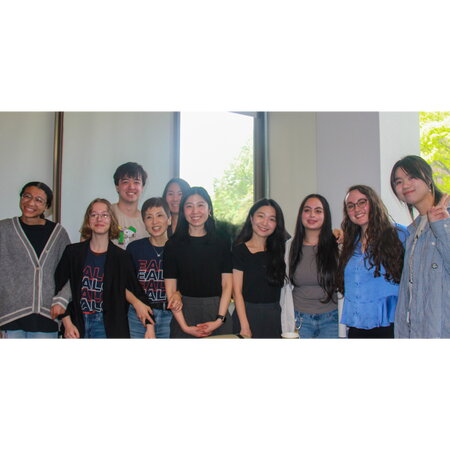
Spring 2025 End-of-Semester Reception Recap
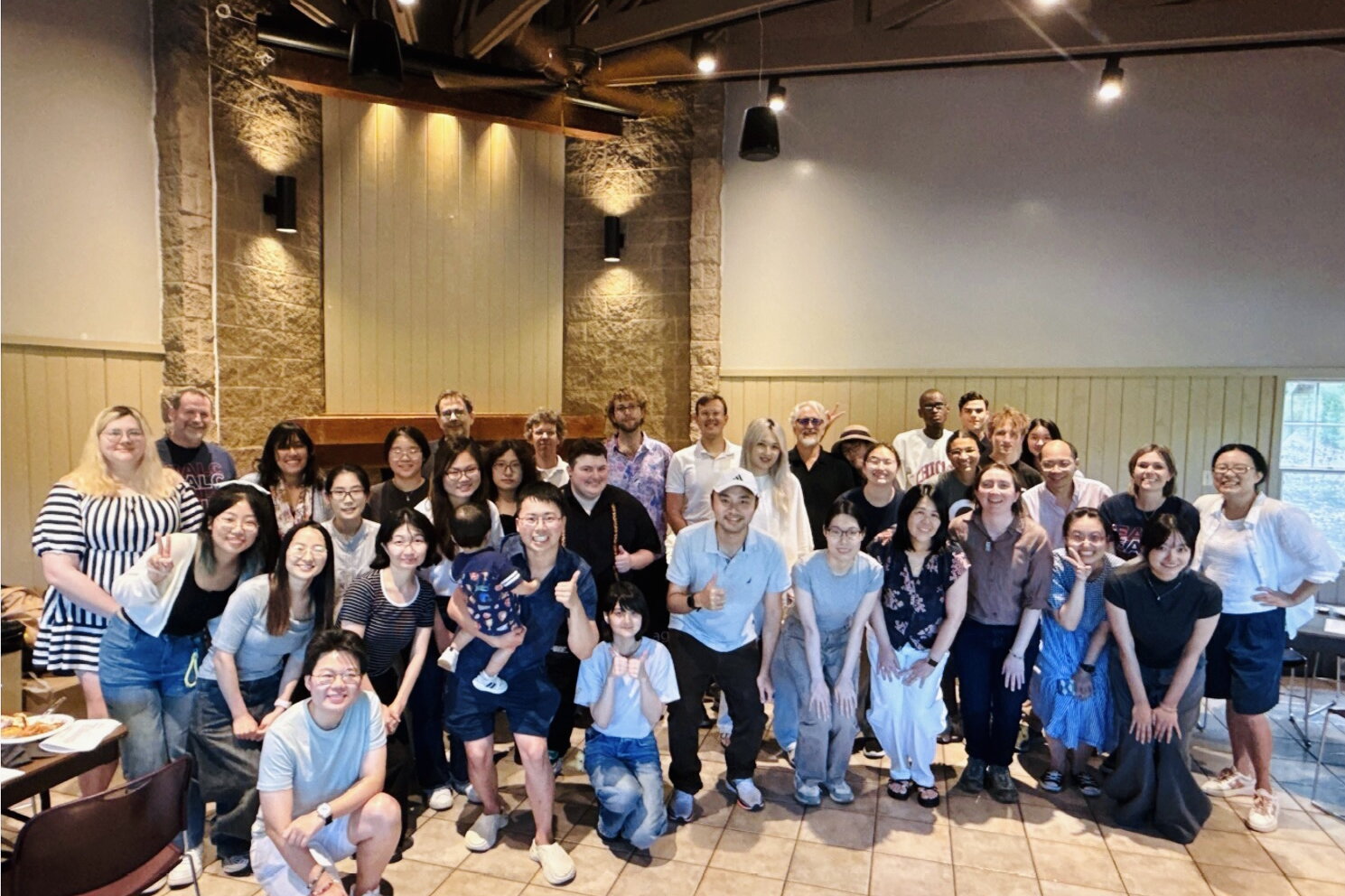
To wrap up the Spring 2025 semester, the Department of East Asian Languages and Cultures hosted an end-of-semester reception to celebrate our students, faculty, and staff. It was a warm and lively gathering, filled with conversation, shared memories, and a variety of East Asian snacks and Kimbap provided by the department. We’re grateful to everyone who joined us and helped make the event a success. Special thanks to our student volunteers who assisted with setup and cleanup! As we look ahead to EALC’s 25th anniversary celebration in AY 2025-2026, we’re excited to continue highlighting the...
Student Spotlight
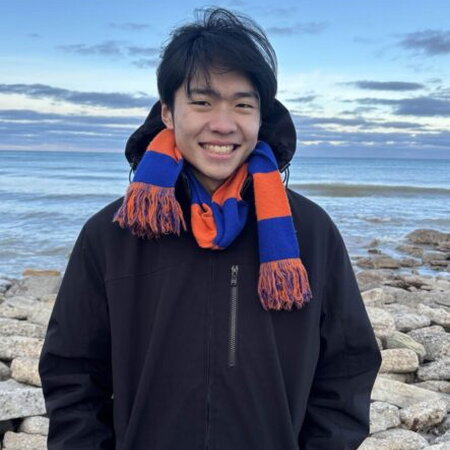
EALC and History double major Lyndon Shi receives prestigious Boren scholarship
EALC sophomore Lyndon Shi is one of only two UIUC students to receive a Boren Scholarship. Shi is from Vernon Hills, Illinois, and attended Adlai E. Stevenson High School. He will study Mandarin at National Tsing Hua University in Taiwan this summer, followed by a year at National Taiwan University for additional language study.David L. Boren Scholarships and Fellowships are funded by the National Security Education...
Student Spotlight
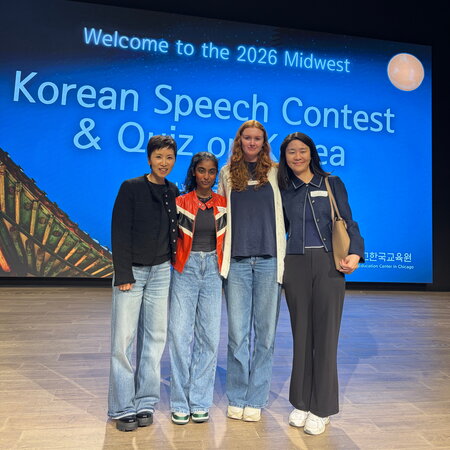
Student Spotlight: 2026 MATK Korean Speech Contest
Jana Karunakaran and Frances Ivy-Barrett, winners of the Beginning and Advanced Levels at the 10th UIUC Korean Speech Contest, represented the Korean Language Program at the 7th Midwest Korean Speech Contest on April 4, 2026. We are proud to share that Jana received the Excellence Award in the Beginning Level category, which includes a $500 cash prize. We warmly congratulate both Jana and Frances for their outstanding efforts and achievements, and for representing our program with such distinction.
Events Spotlight
Spring 2025 End-of-Semester Reception Recap
To wrap up the Spring 2025 semester, the Department of East Asian Languages and Cultures hosted an end-of-semester reception to celebrate our students, faculty, and staff. It was a warm and lively gathering, filled with conversation, shared memories, and a variety of East Asian snacks and Kimbap provided by the department. We’re grateful to everyone who joined us and helped make the event a success. Special thanks to our student volunteers who assisted with setup and cleanup! As we look ahead to EALC’s 25th anniversary celebration in AY 2025-2026, we’re excited to continue highlighting the...

Why Study EALC?
A degree from the Department of East Asian Languages & Cultures equips you with the knowledge and skills for a successful career in a variety of fields while nourishing your interest in different languages and cultures.